Brockley Market business waste removal options for shops
If you run a shop near Brockley Market, waste has a funny habit of showing up at the worst possible time. One minute the counter looks tidy, the next you are dealing with cardboard, packaging, broken displays, old stock, food waste, or a van-load of items that need to disappear before opening time. That is exactly why understanding Brockley Market business waste removal options for shops matters. The right setup keeps the shop floor clear, protects your team, and makes those end-of-day clear-outs feel far less chaotic.
This guide breaks down the practical options, how they work, what to watch out for, and how to choose a method that fits a busy shop environment. We will keep it grounded, local in feel, and useful enough that you can actually act on it, not just read and nod along. Let's face it, most shop owners do not need theory. They need a clean back room and a system that does not get in the way.
For a broader look at commercial collections, you may also find the main business waste removal service useful, especially if you want a regular and flexible arrangement rather than a one-off clear-out.
Table of Contents
- Why Brockley Market business waste removal options for shops Matters
- How Brockley Market business waste removal options for shops Works
- Key Benefits and Practical Advantages
- Who This Is For and When It Makes Sense
- Step-by-Step Guidance
- Expert Tips for Better Results
- Common Mistakes to Avoid
- Tools, Resources and Recommendations
- Law, Compliance, Standards, or Best Practice
- Options, Methods, or Comparison Table
- Case Study or Real-World Example
- Practical Checklist
- Conclusion
- Frequently Asked Questions
Why Brockley Market business waste removal options for shops Matters
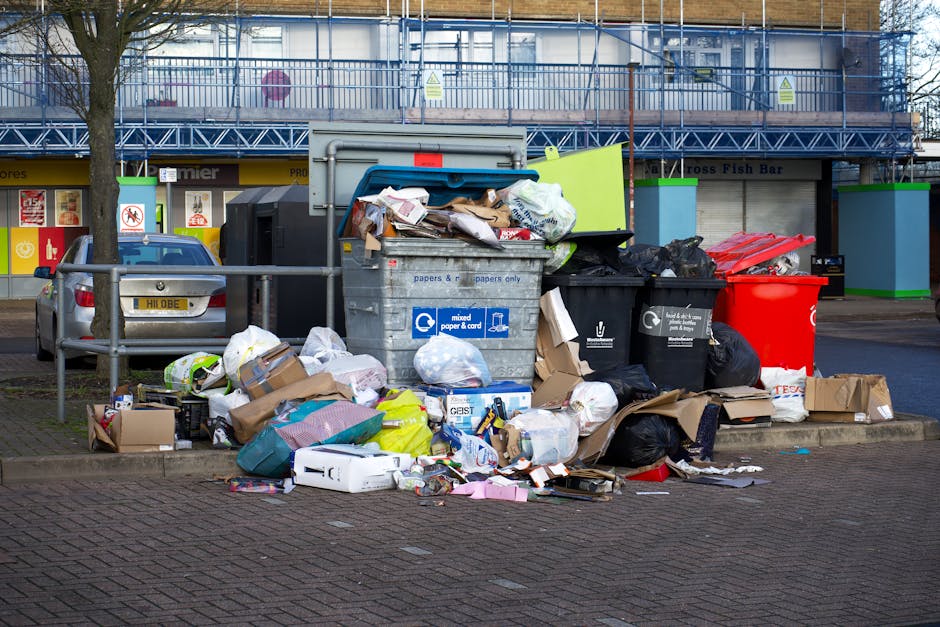
Shops around a market area tend to generate waste in bursts. You might have a quiet morning, then suddenly a delivery lands, packaging piles up, and the stock room starts looking like a small cardboard mountain. If that waste is not dealt with quickly, it spills into customer-facing space, creates trip hazards, and makes the whole shop feel more stressed than it should.
Good waste removal is not just about getting rid of rubbish. It is about keeping a retail business operational. That includes protecting staff from clutter, helping customers move freely, and making sure stock handling stays efficient. In a place with foot traffic and tight back-of-house space, those things are not a luxury. They are basic shop survival, really.
There is also the reputation side of it. A tidy frontage and clean delivery area say something positive before a single word is spoken. Even if customers never see the back room, they can feel when a business is organised. And when you are managing a busy shop, that little detail matters more than people think.
For shops that need a broader clean-out beyond everyday waste, it can help to understand related services such as general waste removal and even office clearance if there is an admin room, storeroom, or upstairs workspace attached to the shop.
Expert summary: The best waste system for a shop is usually the one that matches your space, trading hours, waste type, and collection rhythm. If it feels awkward to use, staff will avoid it. If staff avoid it, the waste builds up. Simple as that.
How Brockley Market business waste removal options for shops Works
Most shop waste removal options fall into one of a few patterns: regular collections, ad hoc clearances, skip-based disposal, or mixed service arrangements. The right one depends on how much waste you produce, what kind it is, and how easy it is to store safely before collection.
1. Regular scheduled collections
This is the most familiar model for shops that produce a steady flow of packaging, dry waste, and general commercial rubbish. A collection day is agreed in advance, and bins or containers are emptied on a set schedule. It is predictable, which is handy when you are juggling deliveries, opening hours, and staff rotas.
Regular collections work well when waste builds up consistently but not explosively. Think of a shop receiving stock every week, with cardboard, film wrap, damaged items, and daily general waste. Nice and steady. Not glamorous, but efficient.
2. One-off shop clearances
Sometimes the real need is not routine collection but a proper reset. That could follow a refit, a change of stock, a lease handover, or a sudden stock purge. A one-off clearance removes bulky items, mixed waste, shelving bits, old POS materials, and whatever else has been hanging around for too long.
This option is often the cleanest answer when you need a fast turnaround and do not want to leave a skip sitting outside for days. It suits shops with limited outside space or awkward access, which, to be fair, is a lot of London retail locations.
3. Skip-based disposal
A skip can make sense if you have enough space and enough waste to justify it. It is best for heavier or bulkier loads and for longer jobs where waste is produced over time. The catch is practical: skips need room, may require permits depending on placement, and can be less convenient for smaller premises.
If you are weighing this up, the page on what can go in a skip is a useful sanity check before you book anything. Nobody wants a half-filled container because the wrong material was put aside for the wrong method.
4. Specialist streams
Some waste from shops needs special handling. That might include appliances, fridges, confidential paperwork, or hazardous items. These should not be mixed into ordinary commercial waste just because it is convenient. Different streams usually need different handling, and good providers should make that clear rather than shrug and hope for the best.
If your shop has broken chillers, display fridges, or a stockroom appliance, the service page for fridge and appliance removal is worth looking at. For sensitive documents, confidential shredding is the more sensible route.
Key Benefits and Practical Advantages
When waste removal is organised properly, the upside shows up in lots of small ways. None of them feel dramatic on their own, but together they make the day run better.
- Cleaner shop presentation: less clutter in the stockroom, till area, and delivery entrance.
- Safer staff movement: reduced trip hazards and fewer awkward lifts around tight corners.
- Better time use: staff spend less time shuffling waste around and more time serving customers.
- Fewer pest risks: especially where food waste, packaging, or stale stock is involved.
- More flexible trading space: you can reclaim back-room areas instead of using them as an accidental dumping ground.
- Improved compliance habits: the right process makes it easier to separate waste correctly and store it properly.
There is also a less obvious benefit: clearer thinking. A tidy shop back area tends to make decisions easier. You know what stock is usable, what needs removing, and what can be sold, donated, or disposed of. That sounds small, but during a busy week it matters more than people admit.
If you are improving the wider appearance of your business premises too, you may want to explore furniture disposal for worn display units or seating, and furniture clearance for larger internal resets.
Who This Is For and When It Makes Sense
This topic is relevant for a lot more shop types than people first assume. If you run a small independent store, a takeaway, a convenience shop, a barber, a cafe with retail space, or a market stall with a storage room, you already know how quickly rubbish can stack up.
It is especially useful if your business regularly handles:
- cardboard boxes and packaging
- display packaging and plastic wrap
- damaged stock or returns
- old shelving, fixtures, and promotional materials
- food waste or mixed refuse from hospitality areas
- appliances, fridges, or cooling equipment
- paper records, leaflets, or confidential paperwork
It also makes sense when your shop is changing shape. Maybe you are moving from seasonal stock to regular stock. Maybe you are rebranding. Maybe the lease is ending and you need the place emptied without a drama-filled last week. Been there, seen that, and the worst jobs always feel bigger on the final day than they did on paper.
If the work is connected to a stockroom, mezzanine, or back-office area, house clearance is not the right fit, but the process often resembles a commercial clear-out. The point is to choose the service type that matches the space and the waste, not the label.
Step-by-Step Guidance
If you want to make the process straightforward, it helps to treat it like a small project rather than a rushed errand. Here is the practical order that usually works best.
- Walk the premises and identify the waste types. Separate cardboard, general waste, bulky items, appliances, and anything sensitive or hazardous.
- Estimate the volume. A few bags? A van load? A back-room full of shelving and stock? You do not need perfection, but you do need a realistic picture.
- Decide what must be removed urgently. Items blocking access, creating risk, or affecting trading should go first.
- Choose the collection method. Regular bins, a one-off clearance, a skip, or a combination.
- Check access and timing. Early morning, after closing, or between deliveries often works best for shops.
- Set aside restricted items separately. Appliances, hazardous materials, and confidential paperwork should not be mixed.
- Book and brief the team. Staff should know what is being removed, what stays, and where to leave items.
- Review the outcome. After the removal, look at what caused the waste spike in the first place. That is where the long-term savings usually hide.
A quick example: a small shop near a market lane may have no issue during the week, then receive three big deliveries on Friday. By Saturday morning the cardboard alone can block the stockroom door. If that happens often, you do not need a heroic clean-up every time. You need a repeatable system. That is the real win.
Expert Tips for Better Results
There are a few habits that make commercial waste handling much smoother. None are complicated, which is the lovely part.
- Keep a waste corner: one clearly marked area for cardboard, one for general waste, one for special items if needed.
- Flatten packaging immediately: it saves an astonishing amount of space. Honestly, cardboard boxes are tiny conspirators.
- Use staff labels or colour cues: a simple visual system reduces mix-ups.
- Schedule clear-outs after deliveries: waste is easier to deal with while it is already being moved around.
- Do not let bulky waste linger: once one item sits there for a week, two more usually join it.
- Factor in customer flow: if the entrance is narrow, collections should avoid peak trading times.
One useful habit is to review waste every month, not just when things get messy. What is building up? What is most annoying to move? What keeps getting put off? Those answers usually point straight to the best waste removal option. It is a bit boring, sure, but boring is what keeps a shop running smoothly.
If your waste includes old stock furniture or display pieces, a service such as office clearance can also help where a shop has an upstairs workspace or admin room attached to it.
Common Mistakes to Avoid
Most waste problems come from a few familiar mistakes. The good news is they are easy to avoid once you know what to watch for.
- Using the wrong collection method: a skip is not always the answer, and a small bin contract will not solve a one-off refit.
- Ignoring access restrictions: tight entrances, stairs, shared hallways, or pedestrian-heavy streets change the job completely.
- Mixing hazardous and general waste: this can create handling and compliance issues.
- Leaving waste until it becomes a hazard: the longer it sits, the messier and more expensive the job often becomes.
- Forgetting about hidden items: old signage, broken stools, stockroom scraps, packaging in lofts or cupboards. They add up.
- Not checking service scope: some providers handle only general waste, while others can support bulky items, appliance removal, or confidential shredding.
A small but important one: do not assume "out of sight" means "fine for later." In a shop, later has a habit of arriving right in the middle of your busiest hour. Messy decisions are usually just delayed decisions, and they rarely get better with age.
Tools, Resources and Recommendations
You do not need a warehouse management system to get better at waste removal. A few simple tools are usually enough.
Practical tools
- Basic inventory notes: useful for spotting what becomes waste repeatedly.
- Shared staff checklist: keeps everyone clearing the same items in the same way.
- Storage tubs or cages: helpful for separating recyclable packaging from general waste.
- Labelled sacks or bins: a small thing, but it reduces chaos quickly.
- Phone photos before a clearance: useful for tracking what was removed and for planning the next visit.
For shops dealing with mixed waste or recurring clear-outs, it is worth reviewing the provider's service pages before booking. If pricing clarity matters, take a look at pricing and quotes so you have a better sense of how jobs are typically scoped. If you want to book directly, book online is the most direct route.
It also helps to understand a company's approach to sustainability and sorting. A provider that talks plainly about recycling often gives you a better sense of what happens after collection. The recycling and sustainability page is worth a look if you want to keep your waste handling a little more responsible.
Law, Compliance, Standards, or Best Practice
Waste handling for shops in the UK comes with responsibilities, even when the job looks simple. You do not need to become a legal expert, but you do need a sensible process and a provider that takes compliance seriously.
In practice, that usually means:
- keeping commercial waste separate from domestic waste
- storing waste safely so it does not block exits or create hazards
- using proper handling for appliances, confidential materials, and hazardous items
- being able to show that waste is managed responsibly
- using insurance-aware, safety-conscious contractors where appropriate
If your shop handles items with safety implications, such as fridges, chemical containers, or other problematic waste, do not guess. Use a specialist route. The page on hazardous waste disposal is there for a reason, and the safer choice is usually the one that looks a little slower at first.
Likewise, if your shop team is handling collections on site, it is worth checking a provider's commitment to health and safety policy and insurance and safety. Those pages are not just formalities. They tell you whether the operator thinks through the risks or just wings it and hopes for the best. You can usually tell the difference fairly quickly.
Options, Methods, or Comparison Table
If you are deciding between methods, this comparison should help. The best choice is usually the one that fits your space, waste type, and trading pattern, not the one that seems cheapest on the surface.
| Option | Best for | Strengths | Limitations |
|---|---|---|---|
| Regular collections | Steady daily or weekly shop waste | Predictable, tidy, low disruption | Less flexible for bulky one-off items |
| One-off clearance | Refits, end-of-lease, stock purge | Fast reset, removes mixed loads | Not ideal for ongoing waste streams |
| Skip hire | Bulk waste with enough space | Good for larger volumes, flexible loading | Space, access, and permit issues may apply |
| Specialist removal | Appliances, confidential items, hazardous waste | Safer handling, clearer compliance | Requires correct segregation and planning |
For many shops, the answer is not one method but two. A small regular setup for everyday waste, plus a one-off clearance when trading conditions change. That combination is often the sweet spot. Not perfect, but practical. Which is usually better anyway.
Case Study or Real-World Example
Imagine a compact shop near Brockley Market with a narrow back room, a small sales area, and frequent deliveries. The owner starts with a simple bin arrangement, but after a few busy weeks the cardboard pile becomes awkward, and damaged stock starts occupying the same corner as cleaning supplies. Nothing dramatic, just the slow creep of clutter that every shop knows too well.
The first fix is to flatten packaging straight after deliveries and separate it from general waste. That immediately frees up some floor space. Then, because a few old display pieces and a redundant appliance are still taking up room, a one-off clearance is booked. The shop schedules it after closing, so staff are not working around it, and the entrance stays clear for morning trade.
What changes next is not just the appearance of the space. Staff move more easily. The stock room becomes usable again. The owner can see what actually needs replacing, rather than just avoiding the corner with the mess. It is a small operational shift, but a useful one. And yes, the shop smells better too, which is rarely a bad thing.
If that same business later expands storage or adds a prep area, the waste plan can be adjusted again. That flexibility is one reason local commercial collections are often a better long-term fit than trying to improvise every month.
Practical Checklist
Use this checklist before arranging a collection or clearance for your shop.
- Have you identified the main waste types?
- Do you know what needs removing urgently?
- Have you separated cardboard, general waste, bulky items, and specialist waste?
- Is there enough access for collection without disrupting customers?
- Do staff know what to leave out and what to keep?
- Have you checked whether any item needs specialist handling?
- Have you reviewed pricing and the likely scope of the job?
- Have you planned the collection around deliveries or busy trading periods?
- Do you have a clean-up plan after the waste is removed?
- Have you considered how to reduce the same waste problem next month?
If you can tick most of those boxes, you are already ahead of many shop operators. The rest is execution. A bit of planning saves a lot of faff later on.
Conclusion
Choosing the right Brockley Market business waste removal options for shops is mostly about fit. Fit for your space, fit for your waste, fit for your trading hours, and fit for the way your team actually works. The best system is not always the biggest or the fanciest one. It is the one that keeps your shop clear without creating more work than it solves.
For most shops, the smartest approach is to start with a realistic waste audit, choose a removal method that matches the load, and keep an eye on the items that quietly cause the most disruption. Cardboard, packaging, old fixtures, appliances, and confidential waste all need different handling. Once that is understood, the whole thing becomes much easier.
There is a calm that comes from a tidy shop. You feel it the moment you walk in. The floor is open, the stockroom makes sense, and the day starts with a little less friction. That is worth aiming for, honestly.
Get a free quote today and see how much you can save.
Frequently Asked Questions
What are the best Brockley Market business waste removal options for shops?
The best option depends on your waste volume and the space you have. Regular collections suit ongoing waste, while one-off clearances are better for bulky stock, refits, and end-of-lease jobs.
Can small shops use commercial waste removal even if they only produce a little rubbish?
Yes. Small shops often benefit from a simple, regular system because even modest waste can build up quickly in a tight space. A small but consistent setup is often easier than trying to improvise.
Is a skip suitable for a shop near Brockley Market?
Sometimes, yes. It works best if you have enough space and a decent amount of waste. If access is tight or the waste is mixed and awkward, a collection-based clearance may be easier.
What kind of waste do shops usually need removed?
Common shop waste includes cardboard, packaging, broken stock, old displays, shelving, mixed general waste, paperwork, and sometimes appliances or refrigeration units.
How do I know if I need a one-off clearance instead of regular collections?
If the problem is a sudden build-up from a refit, stock change, or closing down, a one-off clearance is usually the better choice. If waste appears steadily every week, regular collections make more sense.
What should I do with old fridges or appliances from my shop?
Do not put them in general waste. Appliances should be handled separately through a suitable removal service, especially if they contain gases or other components that need care.
Can confidential paperwork be included in shop waste?
Not casually, no. Sensitive documents should be dealt with through confidential shredding so they are handled properly and do not create a data risk.
How can my shop reduce waste removal costs?
Separate waste more efficiently, flatten cardboard, avoid mixing different waste types, and book the right method for the job. Choosing the correct service from the start usually saves money and hassle.
What are the most common mistakes shop owners make with waste removal?
The biggest mistakes are leaving waste too long, choosing the wrong disposal method, ignoring access issues, and mixing specialist items with ordinary rubbish. Those are the ones that cause avoidable trouble.
Should I worry about health and safety when arranging shop waste removal?
Yes, especially if there are bulky items, sharp edges, awkward lifting, or busy pedestrian access. A responsible service should have clear safety practices and proper insurance.
How quickly can shop waste usually be removed?
That depends on the job size and access. Small collections can be straightforward, while larger clearances may need planning around trading hours. If you need a fast turnaround, it is best to make that clear early.
Where can I learn more about pricing and service options?
A good starting point is the provider's pricing and quotes page, along with their service pages for the specific type of waste you need removed.